

Can You Get Innotox While Taking Antibiotics? Safety Guide
Can You Get Innotox While Taking Antibiotics? A Complete Safety Guide
If you are scheduled for an Innotox treatment but recently started taking antibiotics, you may wonder whether it is safe to keep your appointment. The answer is not always straightforward.
Some antibiotics have little to no effect on botulinum toxin treatments, while others may increase the effects of the neurotoxin or raise the risk of unwanted muscle weakness. In addition, the reason you are taking antibiotics matters just as much as the medication itself.
Understanding these factors helps you and your healthcare provider make the safest decision.
In this guide, you’ll learn which antibiotics may interact with Innotox, when treatment should be postponed, and what dermatology experts generally recommend before receiving injections.
What Is Innotox?
Innotox is a liquid botulinum toxin type A developed in South Korea. Unlike many traditional botulinum toxin products that require reconstitution before use, Innotox comes in a ready-to-use liquid formulation.
It works by temporarily blocking the release of acetylcholine at the neuromuscular junction. This prevents targeted muscles from contracting, helping reduce dynamic wrinkles such as the following:
- Forehead lines
- Frown lines (11 lines)
- Crow’s feet
- Bunny lines
- Chin dimpling
- Neck bands
- Jaw slimming in selected patients
- Hyperhidrosis (excessive sweating)
When administered by an experienced medical professional, Innotox produces predictable and natural-looking results that typically last between three and four months.
Why Antibiotics Matter
Most antibiotics do not automatically prevent you from receiving Innotox.
However, certain antibiotics can influence how nerves communicate with muscles. Since botulinum toxin also affects nerve signaling, combining the two may occasionally increase muscle weakness.
There are two important considerations:
- The antibiotic itself
- The illness being treated
Sometimes the medication is perfectly safe, but the infection indicates that cosmetic treatment should simply wait until you recover.
How Botulinum Toxin Works
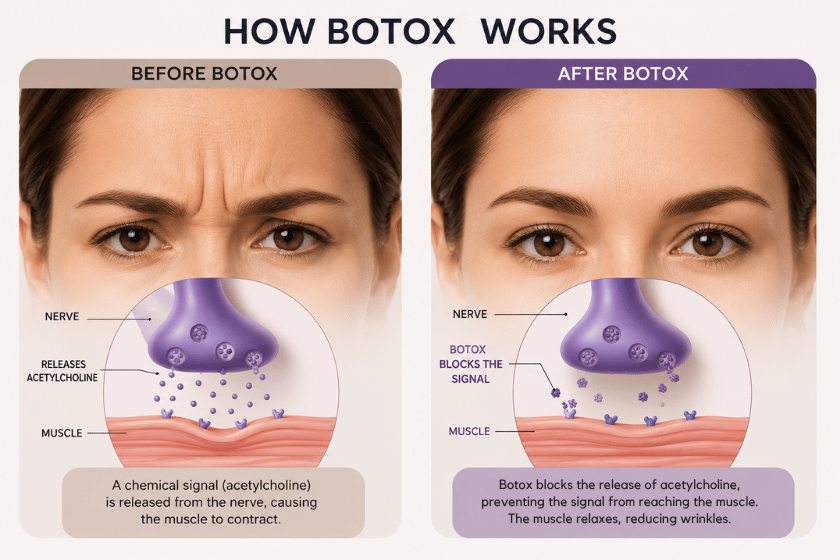
To understand potential interactions, it helps to know how Innotox functions. Normally, nerves release acetylcholine, a chemical messenger that tells muscles to contract. Innotox temporarily blocks this release. As a result, the following processes happen:
- Target muscles relax.
- Wrinkles soften.
- Facial movement becomes less pronounced.
- Results develop gradually over several days.
Certain medications also affect communication between nerves and muscles, which explains why interactions are possible.
Which Antibiotics May Interact with Innotox?

Although serious interactions are uncommon, several antibiotic classes deserve special attention.
Aminoglycosides
This is the antibiotic group most commonly associated with increased botulinum toxin effects.
Examples include:
- Gentamicin
- Tobramycin
- Amikacin
- Neomycin
- Streptomycin
These medications can interfere with neuromuscular transmission, potentially enhancing muscle relaxation caused by botulinum toxin.
Because of this, many clinicians recommend postponing elective cosmetic injections until treatment is complete.
Polymyxins
Examples include:
- Colistin
- Polymyxin B
These antibiotics may also affect neuromuscular function and are generally considered medications that warrant additional caution.
Lincosamides
The most common example is:
- Clindamycin
Clindamycin has been reported to influence neuromuscular transmission under certain circumstances. Although significant interactions remain uncommon, providers usually evaluate patients individually.
Tetracyclines
Examples include:
- Doxycycline
- Minocycline
These antibiotics are frequently prescribed for acne and skin infections.
Current evidence does not suggest a major interaction with botulinum toxin. However, your injector should still know you are taking them.
Penicillins
Examples include:
- Amoxicillin
- Penicillin V
- Augmentin
These are among the most commonly prescribed antibiotics.
Most healthy individuals taking these medications can safely receive botulinum toxin once the treating physician determines the underlying illness is adequately controlled.
Cephalosporins
Examples include:
- Cephalexin
- Cefuroxime
- Cefdinir
These antibiotics are not generally associated with significant interactions with botulinum toxin.
Macrolides
Examples include:
- Azithromycin
- Clarithromycin
- Erythromycin
Current evidence does not indicate a significant direct interaction with Innotox, although healthcare providers still review medications before treatment.
Does the Infection Matter More Than the Antibiotic?
In many cases, yes. Even if your antibiotic does not interact with Innotox, the infection itself may make cosmetic treatment inappropriate.
For example, your provider may postpone treatment if you have:
- Fever
- Influenza
- COVID-19
- Pneumonia
- Active bacterial infection
- Significant facial infection
- Dental abscess
- Cellulitis
Your body heals more effectively when it is not simultaneously fighting an infection and recovering from injections.
Common Situations That Usually Happens
You’re Taking Antibiotics for Acne
Many patients use doxycycline or minocycline for acne.
If you otherwise feel healthy and have no active illness, many dermatology providers can safely perform Innotox treatment after reviewing your medications.
You’re Taking Antibiotics for a Sinus Infection
If your symptoms are improving and you no longer have a fever or significant illness, your provider may decide treatment is appropriate.
However, if you still feel unwell, postponing your appointment is usually recommended.
You’re Recovering from Dental Surgery
Dental infections and oral procedures can temporarily increase inflammation.
Many injectors recommend waiting until healing is complete before receiving cosmetic injections.
You’re Hospitalized with a Serious Infection
Elective cosmetic treatments should always wait until you have fully recovered.
Can Antibiotics Make Innotox Stronger?
Certain antibiotics that interfere with neuromuscular transmission may theoretically increase the effects of botulinum toxin.
Potential consequences include the following:
- Increased muscle weakness
- Greater spread of toxin effect
- Temporary eyelid drooping
- Uneven facial movement
- Difficulty with facial expressions
Fortunately, these complications remain uncommon when patients undergo appropriate screening before treatment.
Other Medications That May Interact with Innotox
Antibiotics are not the only medications worth mentioning. Tell your provider if you take:
- Muscle relaxants
- Magnesium supplements in high doses
- Blood thinners
- Aspirin
- NSAIDs
- Sleep medications
- Allergy medications that cause drowsiness
- Neuromuscular medications
- Other botulinum toxin products
Providing a complete medication list helps minimize risks.
Should You Stop Antibiotics Before Treatment?
No, never discontinue prescribed antibiotics simply to receive cosmetic injections. Instead, do the following:
- Finish the prescribed course.
- Inform your injector.
- Discuss whether treatment should be rescheduled.
- Follow your prescribing physician’s advice.
Completing antibiotic therapy is more important than maintaining a cosmetic appointment.

Questions Your Provider Will Ask
Before treatment, expect your injector to ask questions such as:
- Why are you taking antibiotics?
- Which antibiotic are you taking?
- When did you start it?
- When will you finish?
- Do you currently have a fever?
- Are you recovering normally?
- Do you have any neurological conditions?
- Have you previously received botulinum toxin?
These questions help determine whether treatment is appropriate. If it is your first time, our beginner’s guide to Botox treatment can give you more details on what is usually done during the treatment.
Warning Signs That Mean You Should Reschedule
Postpone your appointment if you have:
- Fever
- Chills
- Active infection
- Significant facial swelling
- Severe dental pain
- Open facial wounds
- Recent hospitalization
- Unexplained muscle weakness
Waiting a week or two is often the safest option. Our guide to those who should avoid Innotox may help you in understanding the precautions of the treatment.
Safety Tips Before Receiving Innotox
To reduce complications:
- Inform your provider about every medication you take.
- Bring an updated medication list.
- Tell them why you are taking antibiotics.
- Avoid hiding recent illnesses.
- Follow all pre-treatment instructions.
- Stay hydrated.
- Complete prescribed medications unless instructed otherwise by your physician.
Open communication leads to safer and more predictable results.

Final Thoughts
Taking antibiotics does not automatically mean you cannot receive Innotox. The safest decision depends on two key factors: which antibiotic you are taking and why you are taking it.
Most commonly prescribed antibiotics, such as amoxicillin, cephalexin, and azithromycin, are not known to significantly interfere with botulinum toxin. However, certain medications—especially aminoglycosides and other antibiotics that affect neuromuscular transmission—require greater caution because they may enhance the effects of the toxin.
Equally important is your overall health. If you have a fever, an active infection, or are recovering from a significant illness or surgery, postponing treatment is often the best approach until you have fully recovered.
The most effective way to ensure safe, natural-looking results is to provide your injector with a complete list of your medications and medical history. With proper screening and guidance from a qualified healthcare professional, most patients can schedule Innotox treatment at the appropriate time while minimizing unnecessary risks.
Frequently Asked Questions
Can I get Innotox while taking amoxicillin?
Many patients can, provided they are otherwise healthy and their treating provider determines the underlying infection has improved. The decision depends more on your overall health than the medication alone.
Can doxycycline interfere with Innotox?
Current evidence does not suggest a major interaction, but your injector should still know you are taking doxycycline before treatment.
Can antibiotics make Botox wear off faster?
No evidence suggests that common antibiotics reduce the effectiveness or duration of botulinum toxin treatments.
Can antibiotics increase Botox side effects?
Certain antibiotics that affect neuromuscular transmission, particularly aminoglycosides, may increase the risk of excessive muscle weakness. Fortunately, these medications are relatively uncommon in routine outpatient care.
How long should I wait after finishing antibiotics?
There is no universal waiting period.
If you have recovered from your illness and your healthcare provider determines it is appropriate, treatment may often proceed shortly after completing antibiotics. The exact timing depends on your health, the type of infection, and the medication used.
Add a Comment