
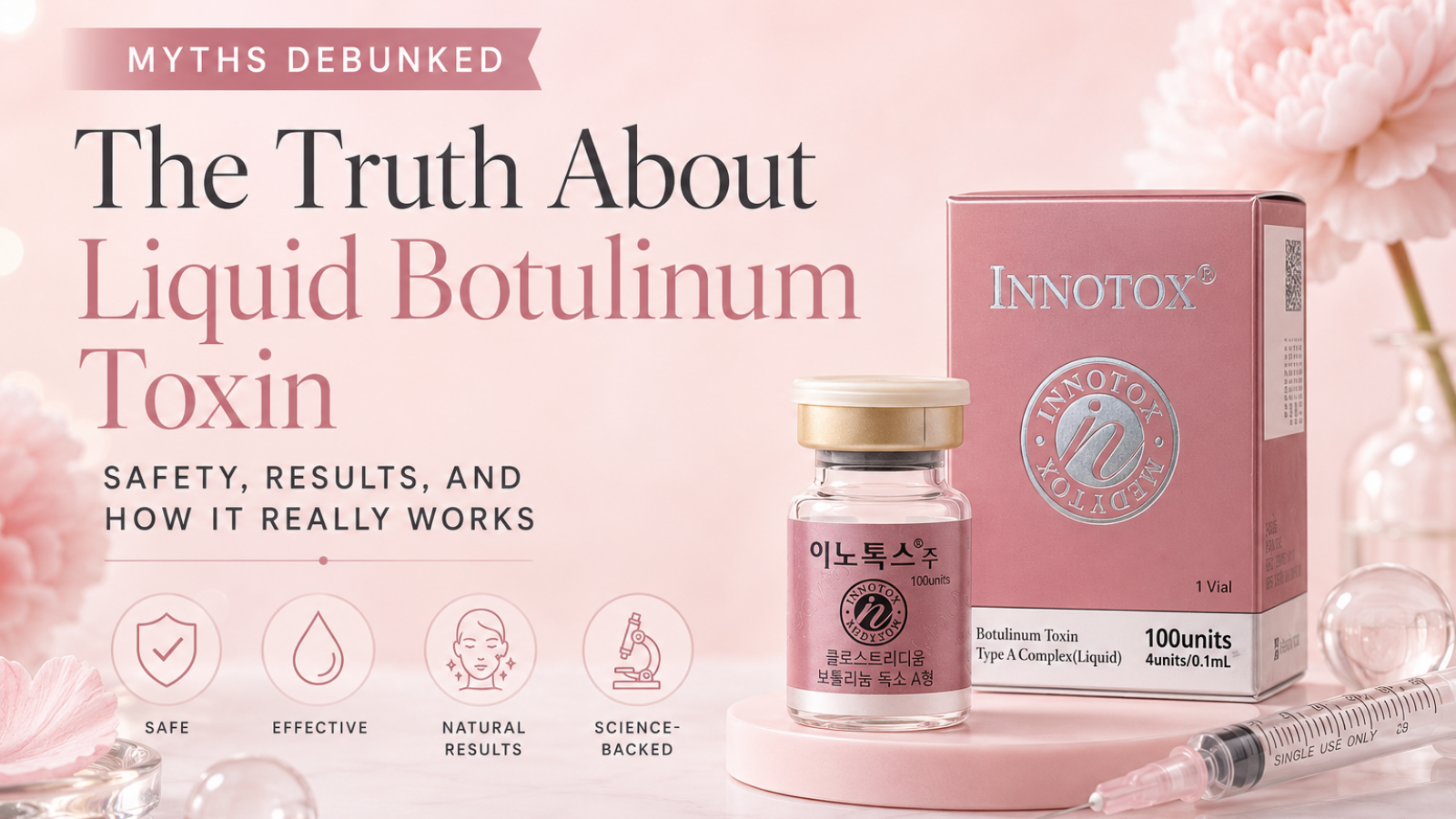
Liquid Botulinum Toxin Myths Debunked: Innotox Facts
Liquid Botulinum Toxin Myths Debunked: The Truth About Innotox, Safety, Results, and How It Really Works
Liquid botulinum toxin has become one of the most talked-about innovations in aesthetic medicine. As more patients and practitioners discover products like Innotox, curiosity continues to grow—but so do the misconceptions.
Social media, online forums, and word-of-mouth recommendations have helped introduce liquid botulinum toxin to a wider audience. Unfortunately, they have also spread myths that can make people hesitant about treatment or create unrealistic expectations.
Some believe liquid formulations are weaker than traditional botulinum toxin. Others think they’re experimental or produce less predictable results. There are even myths suggesting that liquid products wear off faster or are somehow less safe simply because they arrive in liquid form.
The reality is far more straightforward.
The effectiveness of a botulinum toxin treatment depends on many factors, including the formulation, manufacturing quality, storage, injection technique, and patient characteristics—not simply whether the product starts as a powder or a liquid.
In this guide, we’ll separate fact from fiction by addressing the most common myths surrounding liquid botulinum toxin and explaining how products like Innotox actually work.
What Is Liquid Botulinum Toxin?
Traditional botulinum toxin products are manufactured as freeze-dried (lyophilized) powders that require reconstitution with sterile saline before injection.
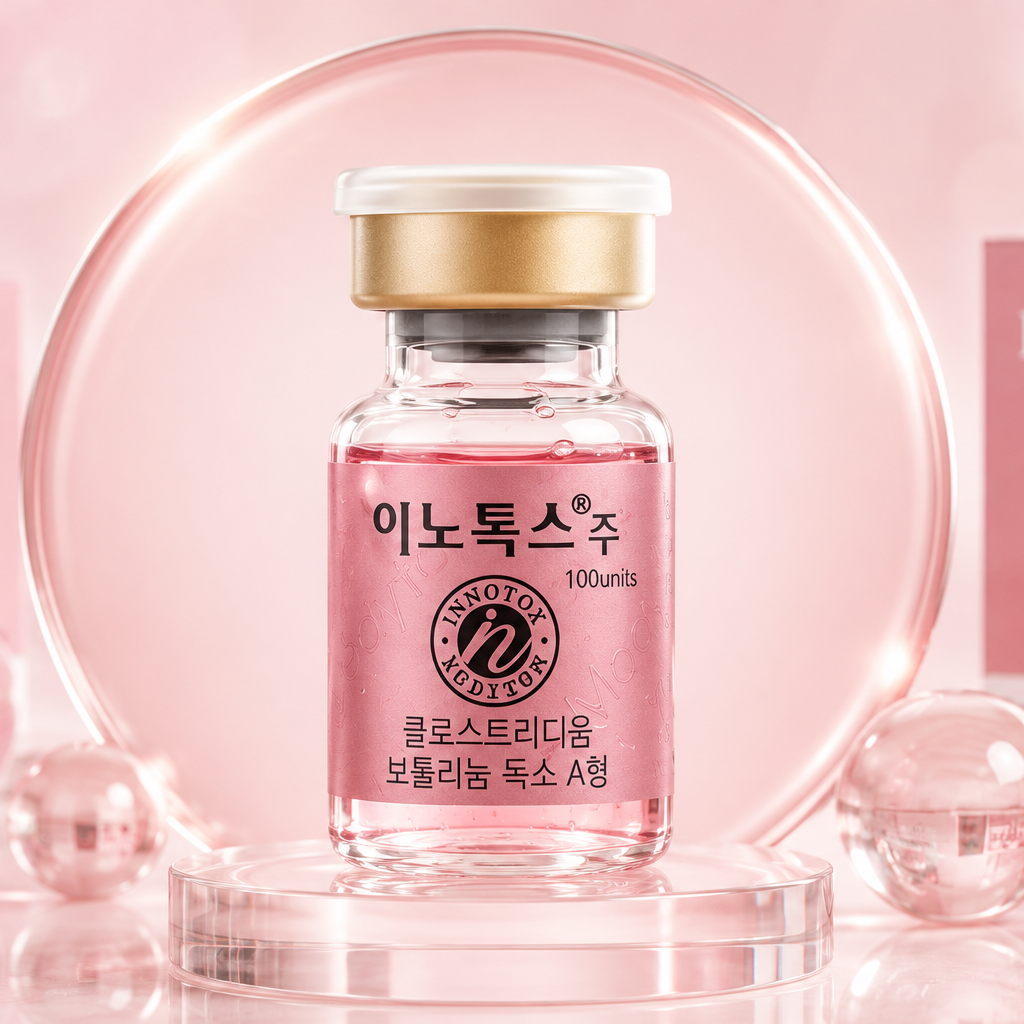
Liquid botulinum toxin products, such as Innotox, arrive as ready-to-use solutions. Because they do not require mixing before administration, practitioners can prepare treatments more efficiently while reducing one variable in the preparation process.
Despite this difference in presentation, both liquid and powdered formulations are designed to temporarily reduce muscle activity by blocking communication between nerves and targeted muscles.
The desired outcome remains the same:
- Softening dynamic wrinkles
- Creating smoother facial expressions
- Preventing deeper expression lines from developing
- Providing natural-looking facial rejuvenation
The liquid formulation simply represents a different pharmaceutical approach—not a completely different treatment.
Why Are There So Many Myths?
Several factors contribute to the confusion surrounding liquid botulinum toxin:
- It is newer to many international markets.
- Patients often compare it to products they’ve used for years.
- Social media frequently spreads personal opinions instead of scientific explanations.
- Many people assume “different” automatically means “better” or “worse.”
Understanding the facts allows patients to have more informed conversations with qualified aesthetic providers.
Myth #1: Liquid Botulinum Toxin Is Weaker Than Traditional Botox
This is one of the most common misconceptions. The formulation being liquid does not automatically make it less potent.
Botulinum toxin products are developed with carefully controlled manufacturing standards. Their effectiveness depends on the formulation and dosing—not whether the medication began as a powder. Innotox has been developed specifically to deliver consistent therapeutic activity while eliminating the need for reconstitution. Practitioners determine dosing based on the product’s unique characteristics rather than assuming direct equivalency between brands.
The truth:
Liquid does not mean weaker. Clinical performance depends on appropriate dosing, product quality, and skilled administration.
Myth #2: Liquid Botulinum Toxin Is Experimental
Some patients assume liquid formulations are new, untested technologies. In reality, liquid botulinum toxin products have been used in several countries for years.
Innotox is manufactured using established pharmaceutical manufacturing processes and has gained popularity among aesthetic practitioners because of its convenience and consistency. Although regulatory approvals vary by country, the concept of ready-to-use botulinum toxin is not experimental.
The truth:
Liquid formulations have accumulated years of clinical use and are not simply laboratory prototypes.
Myth #3: Liquid Products Wear Off Faster
Patients often wonder whether liquid botulinum toxin disappears more quickly than traditional products. Current evidence suggests treatment longevity depends more on factors such as the following:
- Injection technique
- Treatment area
- Individual metabolism
- Muscle strength
- Dose administered
- Frequency of treatments
Many patients experience results lasting approximately three to four months, although individual experiences naturally vary. Whether the product began as a powder or liquid is not the primary factor determining duration.
The truth:
Longevity depends on patient biology and treatment planning—not the physical form of the product.
Myth #4: Liquid Botulinum Toxin Is Less Safe
This misconception often stems from unfamiliarity. Some patients assume powder formulations are somehow more stable because they require mixing immediately before treatment. However, liquid pharmaceutical products undergo extensive stability testing during development. Innotox is manufactured as a stabilized ready-to-use formulation intended to maintain product integrity under recommended storage conditions.

As with any injectable aesthetic treatment, safety depends largely on:
- Proper manufacturing
- Appropriate storage
- Qualified practitioners
- Correct injection technique
- Proper patient selection
The truth:
A liquid formulation is not inherently less safe than a reconstituted formulation.
Myth #5: Ready-to-Use Means Lower Quality
Some people mistakenly associate convenience with reduced quality. In pharmaceutical manufacturing, creating a stable ready-to-use injectable often requires sophisticated formulation science. Instead of requiring practitioners to add saline before every treatment, the medication is manufactured under carefully controlled conditions to provide consistent preparation. Many practitioners appreciate this because it eliminates variability that can occur during manual reconstitution.
The truth:
Ready-to-use products are designed for convenience and consistency—not reduced quality.
Myth #6: All Liquid Botulinum Toxins Are Exactly the Same
Just like powdered botulinum toxin products differ from one another, liquid formulations also have unique characteristics.
Differences may include:
- Manufacturing processes
- Protein composition
- Stabilizing ingredients
- Storage requirements
- Recommended dosing
- Regulatory approvals
Practitioners should never assume all neurotoxins are interchangeable. Each product should be used according to its specific prescribing information and clinical guidance.
The truth:
Every botulinum toxin formulation has unique characteristics that require professional understanding.
Myth #7: Liquid Botulinum Toxin Produces Fake-Looking Results
The frozen-face stereotype has existed for decades. However, unnatural outcomes are generally associated with excessive dosing or poor injection planning—not the formulation itself. Today’s aesthetic philosophy focuses on preserving facial movement while softening unwanted dynamic wrinkles.

Experienced injectors carefully evaluate:
- Facial anatomy
- Muscle activity
- Individual goals
- Facial symmetry
- Natural expressions
When performed correctly, liquid botulinum toxin can provide subtle, refreshed results that preserve facial character.
The truth:
Natural-looking outcomes depend on injector expertise—not whether the product is liquid.
Myth #8: Liquid Botulinum Toxin Works Instantly
Many first-time patients hope to see immediate improvements. In reality, botulinum toxin requires time to affect communication between nerves and muscles.
A typical timeline includes:
| Timeline | What You May Notice |
| Days 1–3 | Early muscle relaxation begins |
| Days 4–7 | Wrinkles gradually soften |
| Days 10–14 | Full cosmetic results become more apparent |
| Around 2 Weeks | Final treatment outcome is usually visible |
It is important to keep in mind that patience is an important part of every treatment journey, especially for aesthetic procedures like Innotox.
The truth:
Results develop gradually rather than immediately.
Myth #9: Liquid Botulinum Toxin Eliminates Every Wrinkle
Botulinum toxin is highly effective for dynamic wrinkles, which develop through repeated facial movement. Examples include forehead lines, crow’s feet, and frown lines. However, deeper static wrinkles, skin laxity, pigmentation concerns, and volume loss often require additional treatments.

Many practitioners combine botulinum toxin with:
- Skin boosters
- Collagen-stimulating treatments
- Laser procedures
- Microneedling
- Dermal fillers
- Medical-grade skincare
Comprehensive facial rejuvenation frequently involves multiple complementary approaches.
The truth:
Botulinum toxin addresses muscle-related wrinkles—not every aspect of skin aging.
Myth #10: Anyone Can Perform Liquid Botulinum Toxin Injections
Because cosmetic injections have become increasingly common, some people underestimate their complexity. Successful treatment requires extensive knowledge of:
- Facial anatomy
- Muscle function
- Vascular structures
- Injection depth
- Product-specific dosing
- Complication management
Choosing an experienced medical professional remains one of the most important decisions a patient can make.
The truth:
Expertise matters far more than the specific product formulation.
Why Many Practitioners Choose Innotox

Although treatment selection varies depending on patient needs, many providers value Innotox for several practical reasons.
Potential advantages include the following:
- Ready-to-Use Convenience
No reconstitution is required before treatment.
- Consistent Preparation
Pre-mixed formulation reduces preparation variability.
- Efficient Workflow
Clinics may benefit from simplified treatment preparation.
- Smooth Patient Experience
Patients often appreciate shorter preparation times before injections.
Ultimately, practitioner experience remains the most important contributor to successful outcomes.
How to Separate Myths From Reliable Information

When researching aesthetic treatments online, it’s helpful to evaluate where the information comes from.
Consider these questions:
- Is the information based on clinical evidence?
- Does it come from qualified medical professionals?
- Does it acknowledge that individual results vary?
- Does it avoid unrealistic promises?
- Does it explain both benefits and limitations?
Reliable education empowers patients to make confident, informed decisions rather than relying on viral trends or anecdotal stories.
Final Thoughts
Liquid botulinum toxin has introduced a new level of convenience to aesthetic medicine, but convenience should not be confused with compromise. Many of the myths surrounding ready-to-use formulations stem from unfamiliarity rather than evidence.
Products such as Innotox are designed to deliver the same core therapeutic goal as traditional botulinum toxin: temporarily relaxing targeted facial muscles to soften dynamic wrinkles and create a smoother, more refreshed appearance. The fact that the product is supplied in liquid form does not inherently make it weaker, less effective, or less safe.
For anyone considering treatment, the most important factors remain choosing a qualified medical professional, having realistic expectations, and understanding that successful outcomes depend on personalized treatment planning rather than product myths. By relying on accurate information instead of online misconceptions, patients can make informed decisions and enjoy natural-looking results that align with their aesthetic goals.
Frequently Asked Questions
Is liquid botulinum toxin different from Botox?
Yes. Liquid botulinum toxin refers to formulations that are manufactured as ready-to-use solutions, while traditional Botox products are typically supplied as powders requiring reconstitution. Both work through the same basic mechanism of temporarily relaxing targeted muscles.
Does Innotox last as long as traditional botulinum toxin?
Many patients experience results lasting approximately three to four months, although individual longevity depends on factors such as metabolism, muscle activity, treatment area, and injection technique.
Is liquid botulinum toxin safe?
When administered by qualified healthcare professionals using properly stored products, liquid botulinum toxin has an established safety profile. As with any medical procedure, individual risks should be discussed during consultation.
Can beginners choose Innotox?
Many first-time patients may be suitable candidates, provided they undergo a proper medical evaluation and receive treatment from an experienced injector.
Does liquid botulinum toxin hurt more?
Most patients report similar levels of comfort compared with traditional botulinum toxin injections. Treatment discomfort is generally brief and well tolerated.
Add a Comment