

How Long Does Innotox Last? Results Timeline
How Long Does Innotox Last? Complete Timeline of Results
One of the most common questions patients ask before receiving wrinkle-relaxing injections is, “How long does Innotox last?” While most people understand that botulinum toxin treatments are temporary, many are surprised to learn that the duration of results varies from person to person. Factors such as muscle strength, metabolism, treatment area, dosage, lifestyle, and previous neurotoxin experience all influence how long the cosmetic effects remain visible. Understanding this timeline allows patients to develop realistic expectations and plan maintenance treatments more effectively.
As a ready-to-use liquid botulinum toxin type A, Innotox has become increasingly popular because it eliminates the dilution step required by many conventional botulinum toxin products. Once injected by a qualified healthcare professional, the medication gradually relaxes targeted facial muscles responsible for dynamic wrinkles while allowing the skin above those muscles to appear smoother over time. Rather than producing immediate results, Innotox works through a gradual biological process that unfolds over several days before reaching its peak effect.
This guide explains exactly what patients can expect after treatment, how long results typically last, which factors influence longevity, and what can be done to help maintain smoother, natural-looking results for as long as possible.
Understanding How Innotox Works
Before discussing how long Innotox lasts, it helps to understand why the treatment gradually develops and eventually wears off. Innotox contains botulinum toxin type A, which temporarily interrupts communication between targeted nerves and muscles. By reducing muscle contraction, repetitive facial movements that create expression lines become softer, allowing dynamic wrinkles to gradually diminish.
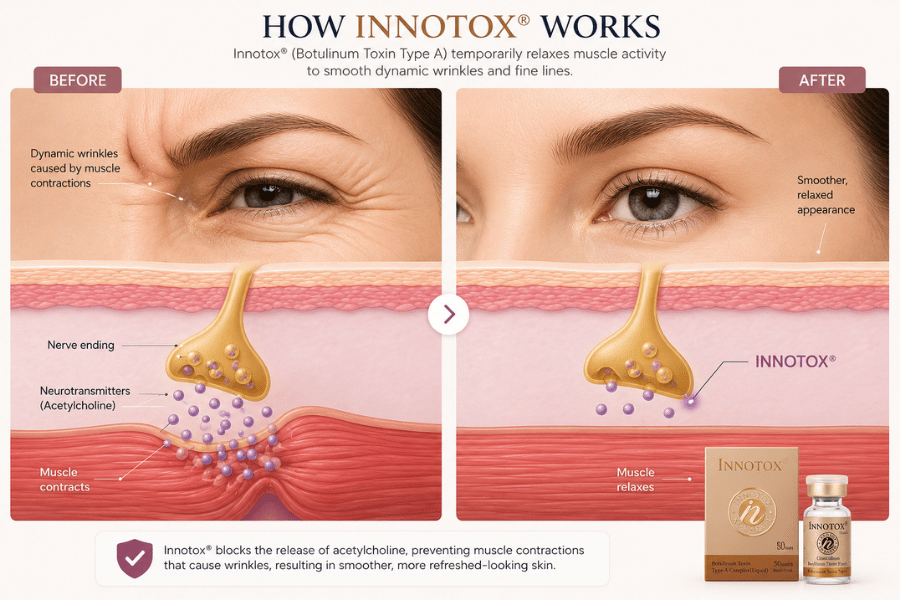
Unlike dermal fillers, which create immediate volume beneath the skin, Innotox works beneath the surface at the neuromuscular junction. This means visible improvement depends on how quickly the medication begins relaxing the treated muscles rather than the injection itself. The biological process requires time, which explains why patients usually leave the clinic looking almost unchanged immediately after treatment. Discover the main difference between Innotox and dermal fillers in our complete guide.
The effects are also temporary because the body naturally repairs nerve communication over time. As new nerve endings develop and muscle activity gradually returns, facial movement slowly resumes and wrinkles become progressively more noticeable again. This natural recovery process is why maintenance treatments are typically performed every few months rather than once permanently.
The Complete Innotox Timeline of Results
Although every patient responds slightly differently, most people experience a similar progression following treatment. Understanding each stage of recovery helps reduce unnecessary concern and prevents unrealistic expectations during the first several days.
Treatment Day
Immediately after treatment, small raised bumps may appear at the injection sites. Mild redness, slight swelling, or pinpoint bruising can also occur but generally resolve within a few hours. At this stage, the medication has already been placed precisely into the targeted muscles, yet visible wrinkle reduction has not begun.
Most patients are able to return to work or normal daily activities immediately after leaving the clinic, provided they follow their practitioner’s aftercare instructions. Avoiding unnecessary pressure on the treated areas during the first few hours helps support proper product placement while the medication begins binding to nerve endings.
Days 1 to 3
During the first several days, most patients continue to look very similar to how they appeared before treatment. While it may feel as though nothing has changed, the medication is actively beginning its work beneath the skin. Some individuals notice very subtle softening of facial movement, but significant wrinkle reduction has usually not yet occurred.
Small bruises may become more noticeable before gradually fading. Mild tenderness or temporary tightness in treated muscles can also occur but generally resolves quickly. Patience during this stage is important because visible improvements are still developing.
Days 4 to 7
Many patients begin seeing noticeable changes by the middle of the first week. Expressions such as frowning, squinting, or raising the eyebrows often feel less forceful as targeted muscles gradually relax. Dynamic wrinkles typically begin appearing softer while natural facial movement remains preserved when treatment has been appropriately planned.
Results do not appear suddenly overnight. Instead, patients often describe a gradual improvement that becomes more noticeable each day. Depending on the treatment area, some muscles may respond slightly earlier than others.
Days 10 to 14
Approximately one to two weeks after treatment, Innotox generally reaches its maximum cosmetic effect. Facial muscles have relaxed to their intended degree, expression lines appear smoother, and patients often notice a refreshed appearance without looking overly frozen.
This is also the period when practitioners commonly evaluate treatment outcomes. If adjustments are necessary, follow-up appointments allow injectors to assess muscle response and facial symmetry before considering additional treatment.
How Long Do Innotox Results Typically Last?
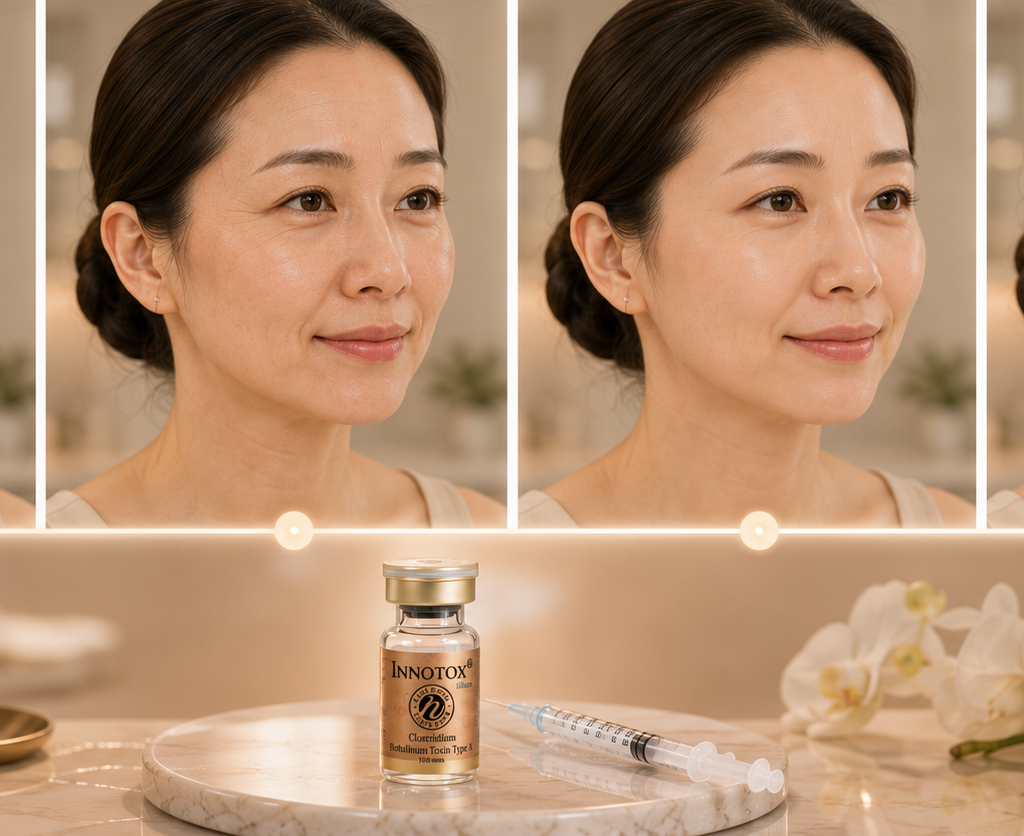
After reaching full effect, most patients enjoy smoother facial movement for approximately three to four months. This timeframe represents the average duration observed in cosmetic practice, although individual experiences vary considerably. Some patients notice gradual return of movement closer to three months, while others continue enjoying visible improvement for four months or slightly longer.
The return of muscle activity is gradual rather than sudden. Patients usually first notice subtle increases in facial movement before wrinkles slowly become more visible again. Because the transition occurs progressively, there is rarely a distinct day when treatment simply “stops working.”
Certain treatment areas naturally remain effective for different lengths of time because muscles throughout the face differ significantly in strength and daily activity. Larger muscles involved in jaw slimming or facial contouring may behave differently than the smaller muscles responsible for crow’s feet or bunny lines.
Why Results Last Longer for Some People Than Others
One of the reasons patients compare their experiences is because longevity can vary even when identical products are used. Several factors influence how quickly muscle activity returns after treatment.
Some of the most important influences include:
- Muscle strength: Larger, stronger muscles generally regain activity sooner than smaller muscles.
- Treatment area: Frequently used facial muscles may metabolize treatment differently than less active areas.
- Individual metabolism: People with faster metabolic rates sometimes notice slightly shorter treatment duration.
- Dosage administered: Appropriate dosing helps achieve balanced longevity while preserving natural expression. This is most suitable if either a Baby Botox approach or a Full-Dose Botox technique is applied during treatment. Read more on their differences in our article about Baby botox vs. Full-Dose Botox.
- Previous neurotoxin treatments: Maintenance sessions may allow practitioners to fine-tune dosage based on previous response.
- Lifestyle factors: Intense physical activity, stress, and other individual variables may influence how quickly results gradually diminish.
Rather than focusing on a single factor, experienced injectors evaluate the entire clinical picture when discussing expected longevity with patients. Because every individual responds differently, treatment plans remain highly personalized rather than standardized.
Does the Treatment Area Affect Longevity?
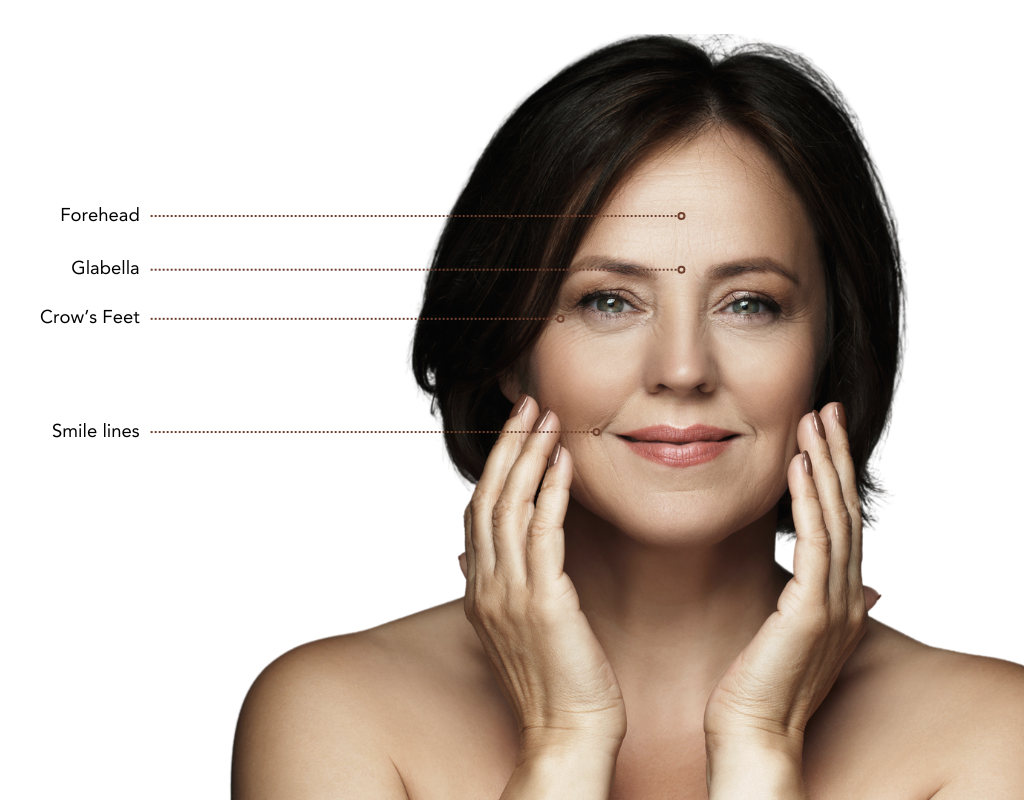
Yes. Not every facial muscle behaves in exactly the same way, meaning some treatment areas naturally maintain results longer than others. The frequency with which muscles contract throughout daily life plays an important role in determining how long cosmetic improvement remains noticeable.
For example, forehead muscles are constantly involved in raising the eyebrows and expressing surprise, while the muscles around the eyes repeatedly contract during smiling and squinting. Larger muscles such as the masseters, which assist with chewing, are used throughout the day and therefore respond differently than smaller facial muscles. These natural anatomical differences explain why maintenance schedules may vary depending on the treatment area.
Practitioners also consider how muscles interact with one another. Treating multiple facial areas simultaneously often requires balancing dosages to preserve harmony rather than maximizing longevity in a single region.
Can You Make Innotox Last Longer?

Although no method can permanently extend the biological activity of botulinum toxin, healthy habits and appropriate treatment planning may help patients maintain consistent results over time. Rather than searching for shortcuts, patients benefit most from working closely with experienced practitioners and following recommended aftercare.
Helpful strategies include:
- Attend maintenance appointments before muscle activity fully returns.
- Follow all aftercare instructions provided after treatment.
- Protect your skin with daily broad-spectrum sunscreen.
- Maintain a consistent skincare routine that supports overall skin health.
- Avoid choosing treatment based solely on low price rather than injector experience.
- Discuss previous treatment response with your practitioner during follow-up visits.
Long-term wrinkle management depends on more than simply repeating injections every few months. Careful assessment, individualized dosage adjustments, and ongoing communication with a qualified healthcare provider often produce the most natural and consistent outcomes.
What Happens When Innotox Wears Off?
One of the biggest misconceptions surrounding botulinum toxin is that wrinkles suddenly become worse once treatment wears off. In reality, muscles gradually regain their normal activity as nerve communication naturally recovers. Facial movement slowly returns over several weeks, allowing expression lines to become progressively more visible again.
Importantly, the treatment does not accelerate skin aging or permanently weaken facial muscles. Patients generally return to their natural baseline appearance rather than experiencing exaggerated wrinkles. Many individuals even feel that regular treatment helps delay the deepening of dynamic lines because repetitive muscle contraction has been reduced for several months.
As results gradually fade, patients can decide whether they wish to schedule another maintenance appointment or simply allow muscle activity to return naturally. The flexibility of temporary treatment remains one of the reasons why many people choose Innotox for wrinkle management.
When Should You Schedule Your Next Appointment?

Rather than waiting until every wrinkle has fully returned, many practitioners recommend scheduling follow-up consultations approximately three to four months after treatment. This allows the injector to evaluate how muscles are recovering and determine whether maintenance treatment is appropriate.
Some patients naturally require longer intervals, while others with stronger facial muscles may prefer slightly earlier maintenance appointments. There is no universally correct schedule because every treatment plan should reflect the patient’s anatomy, goals, and previous response rather than following a rigid calendar.
Over time, experienced injectors often refine dosage and injection placement based on previous outcomes. This personalized approach helps optimize both longevity and cosmetic balance while maintaining natural facial movement.
Understanding the Timeline Helps You Set Realistic Expectations
Knowing how long Innotox lasts allows patients to approach treatment with confidence and realistic expectations. Although visible improvements usually develop gradually over one to two weeks and typically remain noticeable for around three to four months, every patient’s experience is unique. Muscle strength, metabolism, treatment area, and individualized dosing all contribute to the duration of results.
Rather than focusing solely on how many months the treatment lasts, patients often achieve the greatest satisfaction by viewing Innotox as part of an ongoing aesthetic plan rather than a one-time procedure. Regular consultations with a qualified healthcare professional allow treatment to evolve alongside changing facial anatomy and cosmetic goals, helping maintain refreshed, natural-looking results over time.
Frequently Asked Questions
How long does Innotox usually last?
Most patients experience visible cosmetic improvement for approximately three to four months, although individual results vary.
When will I see the full results?
Maximum wrinkle reduction typically develops 10 to 14 days after treatment.
Does Innotox wear off suddenly?
No. Muscle activity gradually returns over several weeks, allowing facial movement and dynamic wrinkles to reappear progressively rather than overnight.
Can maintenance treatments extend the benefits?
Regular maintenance appointments allow practitioners to refine treatment plans and maintain consistent wrinkle reduction over time, although each session remains temporary.
Do stronger facial muscles shorten treatment duration?
In many cases, stronger muscles may regain activity sooner than smaller muscles, which is why individualized dosing and maintenance schedules are important.
Add a Comment