
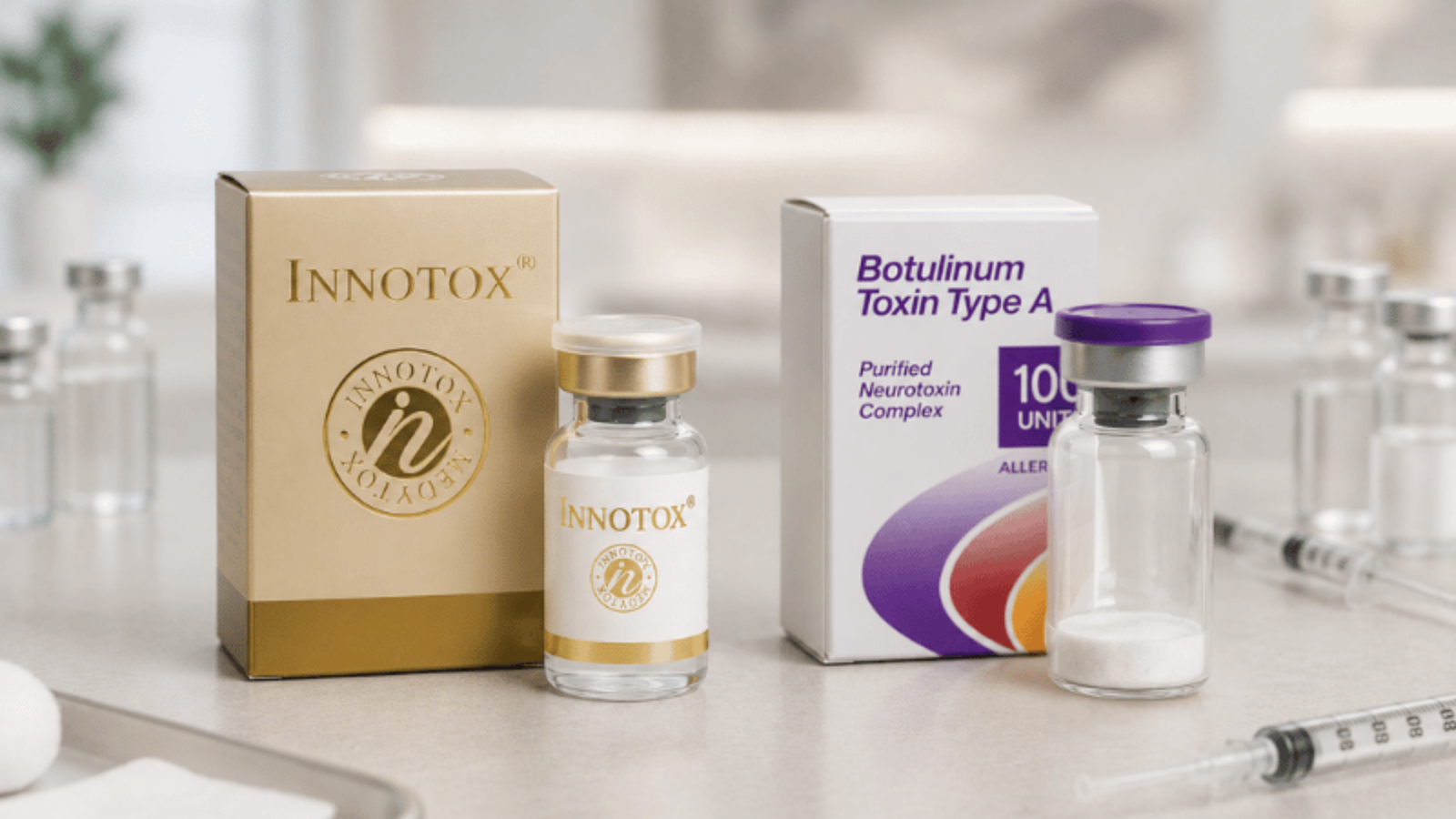
Innotox vs. Traditional Botox: What is the Difference?
Botox treatments have been one of the most sought-after non-surgical cosmetic procedures around the world for decades. Botulinum toxin injections have helped millions of people look youthful without surgery, smoothing forehead lines and softening crow’s feet and frown lines.
However, today, patients and aesthetic practitioners have more options than ever before. Innotox is one of the most talked-about innovations in the field, a unique liquid botulinum toxin formulation that has a number of advantages over traditional Botox products.
While both treatments serve the same primary purpose—temporarily relaxing facial muscles to reduce dynamic wrinkles—their formulations, preparation methods, and treatment experiences differ significantly. So, what exactly sets Innotox apart from traditional Botox? Let’s take a closer look through this comprehensive article.
Understanding Botulinum Toxin Treatments
Before comparing the two, it’s important to understand what botulinum toxin treatments actually do. Botulinum toxin type A is a purified neurotoxin that temporarily blocks communication between nerves and muscles. When injected into targeted muscles, it reduces muscle contractions that contribute to expression lines and wrinkles. Common treatment areas include forehead lines, glabellar lines (frown lines between the eyebrows), crow’s feet, bunny lines, chin dimpling, jawline contouring, and neck bands.
The goal is not to eliminate facial expressions entirely but to soften repetitive movements that lead to visible signs of aging. Modern treatments with Botox target producing natural expressions rather than that “frozen look” often associated with neurotoxins. There may be different strains of botulinum toxin, with Clostridium botulinum toxin type A as the most prevalent one, present in each formulation, but all have one central purpose—to reduce the appearance of various signs of aging, such as wrinkles and fine lines.
Additionally, botulinum toxin may be available in different concentrations and manufactured to be reconstituted differently and administered in a specific technique. For this article, we will be focusing on the difference between liquid Botox and lyophilized powder-based Botox products.
What Is Traditional Botox?
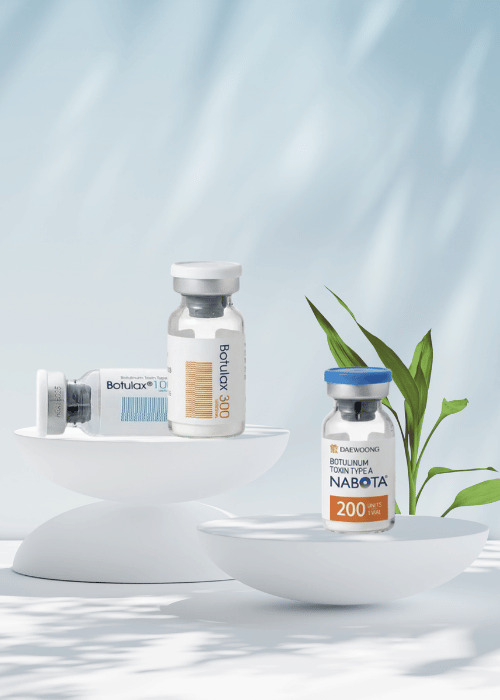
The term “Botox” is often used generically to describe all botulinum toxin treatments, but technically, Botox is a specific brand manufactured by Allergan Aesthetics. Traditional Botox products are supplied as a lyophilized powder, commonly referred to as freeze-dried botulinum toxin. Before treatment, practitioners must reconstitute the powder with sterile saline solution to create an injectable liquid. This process has been standard practice for many years and is widely accepted throughout aesthetic medicine.
Key Characteristics of Traditional Botox
- Supplied in powder form
- Requires dilution with saline
- Preparation performed before treatment
- Widely used globally
- Effective for treating dynamic wrinkles
- Extensive clinical history
While traditional Botox remains highly effective, the reconstitution process introduces certain variables that can affect consistency if not performed correctly.
What Is Innotox?
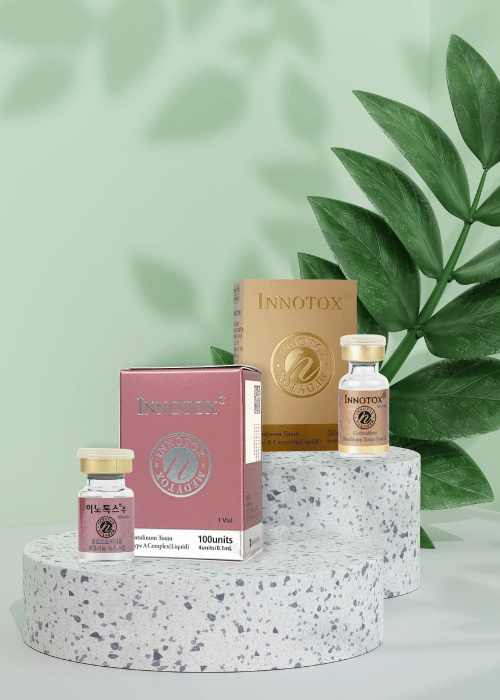
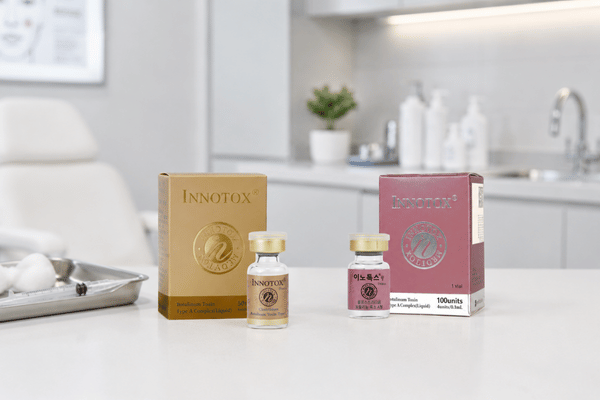
Innotox is a next-generation botulinum toxin product developed by Medytox Inc. Unlike conventional Botox formulations, Innotox comes as a ready-to-use liquid solution, eliminating the need for dilution before injection.
This innovation makes Innotox one of the first commercially available liquid botulinum toxin products in the aesthetic market. The pre-mixed formulation provides convenience for practitioners while offering greater consistency during treatment.
Key Characteristics of Innotox
- Ready-to-use liquid formulation
- No reconstitution required
- Precise concentration
- Reduced preparation time
- Consistent dosing
- Convenient storage and handling
Its liquid presentation is one of the primary reasons why many clinics and practitioners are increasingly interested in incorporating Innotox into their treatment offerings.
The Biggest Difference: Liquid vs. Powder
The most significant distinction between Innotox and traditional Botox lies in their formulation.
Traditional Botox
Traditional Botox arrives as a freeze-dried powder and requires mixing with saline before use. During reconstitution, practitioners determine the dilution ratio according to their treatment preferences and protocols. While experienced injectors can achieve excellent results, slight variations in dilution practices may occur between clinics.
Innotox
Innotox arrives in a pre-prepared liquid solution. There is no need to add saline or perform any mixing before administration. Because the product is already formulated at a fixed concentration, treatment consistency may be enhanced and preparation errors minimized. This ready-to-use approach is often viewed as one of Innotox’s most appealing advantages.
Consistency and Precision

One concern with powdered neurotoxins is that dilution practices can vary among providers. Although these differences are usually minor, the final concentration may differ slightly depending on how the product is reconstituted. With Innotox, every vial is supplied at a standardized concentration. This consistency can offer several benefits:
- More predictable dosing
- Reduced preparation variability
- Improved workflow efficiency
- Enhanced treatment standardization
Treatment Experience for Patients
From the patient’s perspective, the treatment experience is generally similar regardless of which product is used. Both involve:
- Consultation and assessment
- Facial mapping
- Strategic injections
- Minimal downtime
- Gradual onset of results
Most sessions take less than 30 minutes and allow patients to return to daily activities shortly afterward. However, because Innotox requires no reconstitution, treatment preparation may be faster and more streamlined. While patients may not directly notice the preparation difference, clinics often appreciate the efficiency it provides.
Diffusion Characteristics
Diffusion refers to how a neurotoxin spreads after injection. Proper diffusion is important because it influences both effectiveness and precision. Some practitioners report that Innotox demonstrates smooth and predictable diffusion characteristics, allowing for accurate placement in targeted treatment areas. This can be especially beneficial when treating delicate facial regions where precision is essential. As with any injectable treatment, outcomes ultimately depend on:
- Injector skill
- Facial anatomy
- Treatment goals
- Product selection
Onset of Results

Many patients want to know how quickly they will see improvements. Individual response varies, but both products generally produce results within a similar timeframe.
Traditional Botox
Results from traditional Botox typically appear within 3 to 7 days after treatment, with full effects often visible within 10 to 14 days.
Innotox
With Innotox, many practitioners report that early visible improvement may be seen within several days, while full results typically develop within approximately 1 to 2 weeks.
Duration of Effects
One of the most common questions patients ask is “How long will my results last?” The answer depends on factors such as metabolism, muscle strength, treatment area, dosage, and lifestyle habits. Regular maintenance treatments help preserve results over time.
For both traditional Botox and Innotox, results commonly last for about 3 to 4 months. But some patients report after using Innotox that effects last longer depending on the treatment protocols.
Protein Composition and Purity
Another notable aspect of Innotox is its formulation design. Innotox is manufactured using advanced purification technology intended to minimize unnecessary protein components while maintaining effectiveness.
A purified formulation may offer advantages such as the following:
- Improved product stability
- Consistent performance
- Reduced likelihood of unwanted immune responses over long-term use
This focus on refinement reflects broader trends in aesthetic medicine toward more sophisticated injectable products.
Common Treatment Areas of Botulinum Toxin
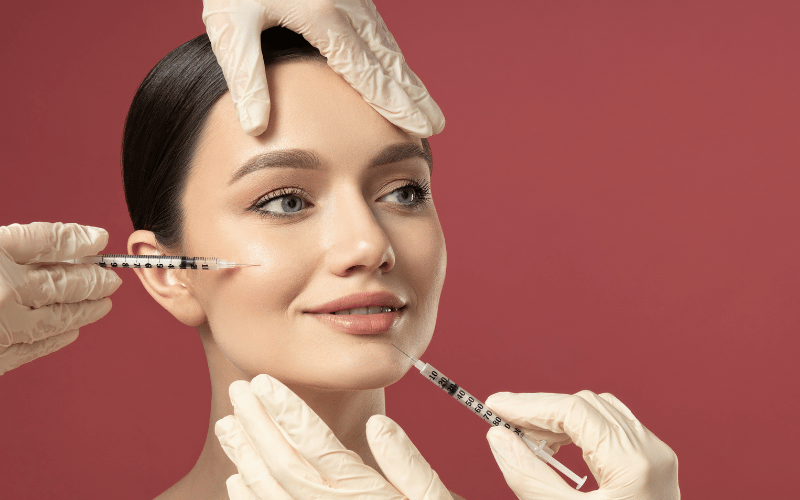
Both Innotox and traditional Botox can be used for many of the same cosmetic indications. Popular treatment areas include:
- Forehead Lines
Repeated eyebrow movements create horizontal forehead creases over time. Neurotoxin treatments help soften these lines while maintaining natural expression.
- Glabellar Lines
Often called “11 lines,” these vertical wrinkles between the eyebrows are among the most frequently treated areas.
- Crow’s Feet
Fine lines around the eyes become more noticeable with smiling and squinting. Treatment can create a smoother, more refreshed appearance.
- Bunny Lines
Wrinkles on the sides of the nose can be reduced through carefully placed injections.
- Jawline Contouring
Masseter muscle treatment can create a slimmer facial profile while addressing jaw tension.
- Neck Bands
Botulinum toxin can improve the appearance of prominent platysmal bands in the neck.
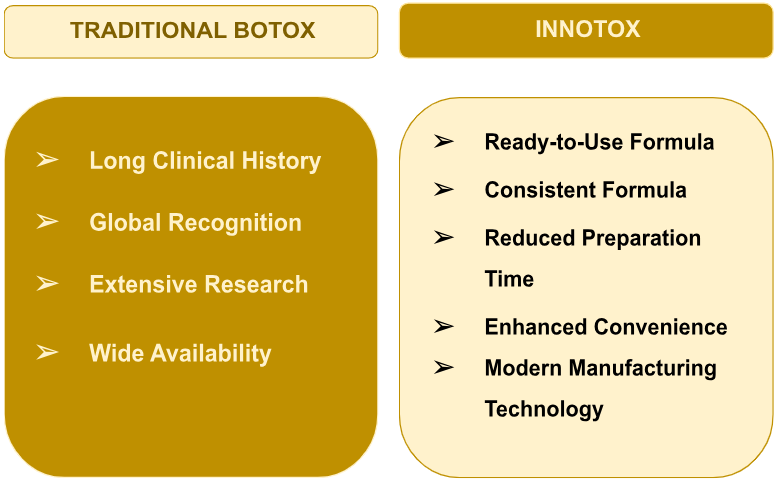
Advantages of Innotox vs. Traditional Botox
While traditional Botox remains highly respected, Innotox offers several unique benefits.
But Which Option Is Better?
The truth is that there is no universal answer. The “better” option depends on different factors, like:
- Practitioner’s preference
- Treatment goals of the patient
- Patient anatomy
- Product availability
- Clinical experience
Many providers appreciate Innotox for its convenience, consistency, and innovative liquid formulation. Others continue to rely on traditional Botox due to its long-established history and familiarity. When administered by a qualified professional, both options can deliver excellent aesthetic outcomes. As awareness grows, Innotox continues to gain popularity among aesthetic professionals worldwide; thus, Innotox may be appealing for the following:
- Patients seeking modern aesthetic solutions
- Clinics focused on treatment efficiency
- Practitioners who prefer ready-to-use formulations
- Individuals interested in consistent dosing
- Those exploring alternatives to conventional neurotoxins
The Future of Neurotoxin Treatments
The aesthetic industry is constantly evolving. Patients increasingly seek treatments that offer convenience, precision, consistency, and natural-looking outcomes. Innotox represents a significant advancement in botulinum toxin technology by addressing one of the traditional limitations of powdered neurotoxins: the need for reconstitution. As innovation continues, ready-to-use liquid neurotoxins may become an increasingly important part of modern aesthetic medicine.
Both Innotox and traditional Botox are effective solutions for reducing dynamic wrinkles and achieving a smoother, more youthful appearance. While they share the same fundamental mechanism of action, their formulations differ considerably. Traditional Botox is supplied as a freeze-dried powder that requires reconstitution before use, whereas Innotox arrives as a ready-to-use liquid formulation. This distinction offers advantages in consistency, convenience, and treatment efficiency that many practitioners value.
For patients, the choice often comes down to the expertise of the injector and the treatment plan designed to achieve their desired results. Whether you choose Innotox or a traditional Botox product, consulting with an experienced aesthetic professional is the best way to determine the most appropriate option for your unique needs.
As the field of aesthetic medicine advances, innovations like Innotox are helping redefine what patients and providers can expect from modern neurotoxin treatments, making cosmetic procedures more precise, efficient, and accessible than ever before.
Add a Comment